
EIT Digital SCOUT · Commercialization
From pilot to commercial use.
The EIT Digital SCOUT project helped fund RIoT Secure’s pilot work with Comau and SAS. It became part of our commercialization experience: taking secure IoT technology into customer environments, with the SAS pilot later developing into a commercial deployment.
Commercialization in practice
Support. Pilots. Commercial operation.
SCOUT connected technology development with customer integration and practical deployment experience across manufacturing and airport ground operations.
-
Supported development
EIT Digital’s SCOUT innovation activity supported the commercialization of RIoT Secure’s secure communication and device lifecycle management technology.
-
Comau and SAS pilots
SCOUT support helped fund pilot case studies with Comau and SAS, taking the technology into manufacturing and airport ground-handling applications.
-
SAS commercial deployment
The SAS pilot subsequently became a commercial deployment at Stockholm Arlanda Airport, bringing the platform into daily ground-handling operations.
Project background
Commercialization alongside the engineering.
SCOUT — Secure Control of Ubiquitous Technology — was an EIT Digital-supported innovation activity focused on secure communication, device lifecycle management and Industrial IoT. The collaboration brought together RIoT Secure, Comau and Politecnico di Milano.
For RIoT Secure, it was an opportunity to connect embedded and cloud technology with customer requirements, integration work and the practical steps needed to bring a solution to market.
RIoT Secure’s daughter company
Taking the technology to market with Ingwaz.
Ingwaz, RIoT Secure’s daughter company, was created in 2020 as part of the SCOUT commercialization work. It provided a dedicated venture for bringing the secure lifecycle management platform to market.
EIT Digital’s 2020 annual report records the creation of Ingwaz. Its 2021 report describes the deployment of the product in two pilots, in Italy and Sweden.
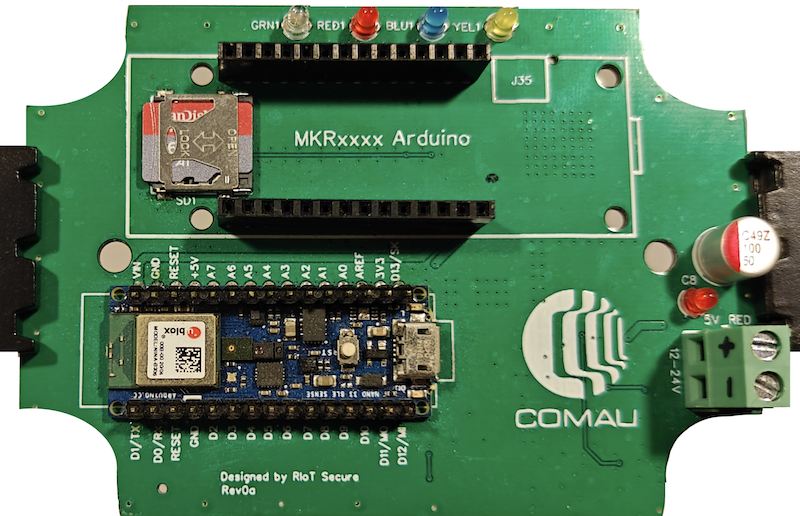
Industrial pilot · Comau
Industrial pilot work with Comau.
SCOUT support helped fund RIoT Secure’s pilot work with Comau in industrial robotics. The collaboration brought secure communication and device lifecycle management into a setting where the customer’s application, hardware and development workflow needed to work together.
The Comau robotics-monitoring case used dedicated hardware for sensor processing and machine-learning inference, alongside an independent communication and lifecycle layer. It illustrates how application teams could develop their own functionality while RIoT Secure provided the infrastructure to connect and maintain the devices.
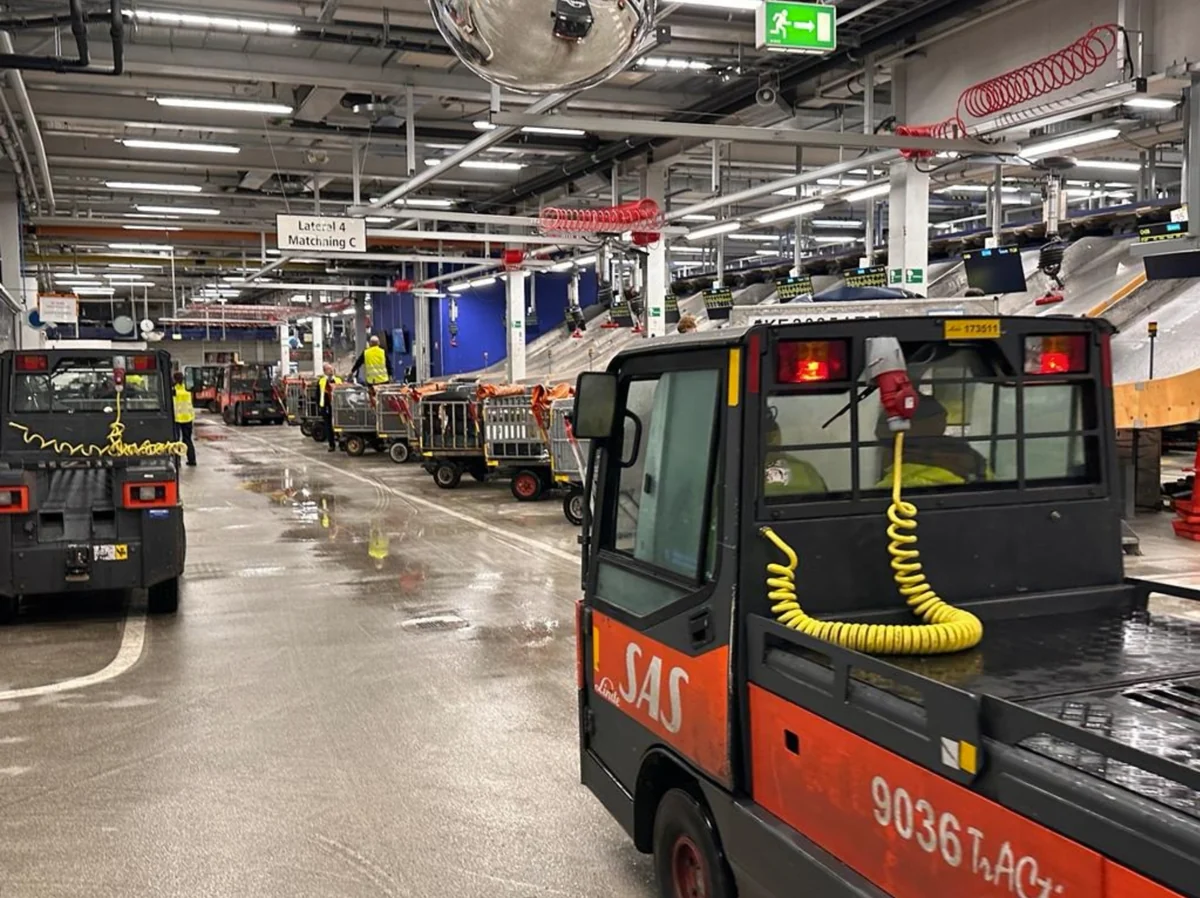
Pilot to commercial deployment · SAS
From a SAS pilot to commercial use.
The pilot work with SAS, supported through SCOUT, subsequently developed into a commercial deployment at Stockholm Arlanda Airport. RIoT Secure went on to support connected ground-handling devices across more than three years of daily operations.
The deployment supported equipment monitoring, operational data collection, geofencing and integration with existing airport workflows. A private APN provided the underlying network environment, with RIoT Secure adding encrypted communication and device lifecycle management.
This progression put the platform to work beyond the pilot: devices had to remain connected, maintainable and integrated with the customer’s operational environment.
What we bring to the next project
Technology has to work in a customer’s world.
The SCOUT pilots gave RIoT Secure practical experience in integrating secure communication and lifecycle management around customer applications. Hardware choices, software delivery, data integration and ongoing device maintenance all formed part of the work.
The subsequent SAS commercial deployment extended that experience into daily operation. This is part of the background we bring to new IoT projects: understanding both the application and the infrastructure needed to deploy and maintain it.
Historical project documents
The original project material.
These documents record SCOUT’s original scope, technical architecture and commercial proposition. Open a section to explore the historical material alongside its context.
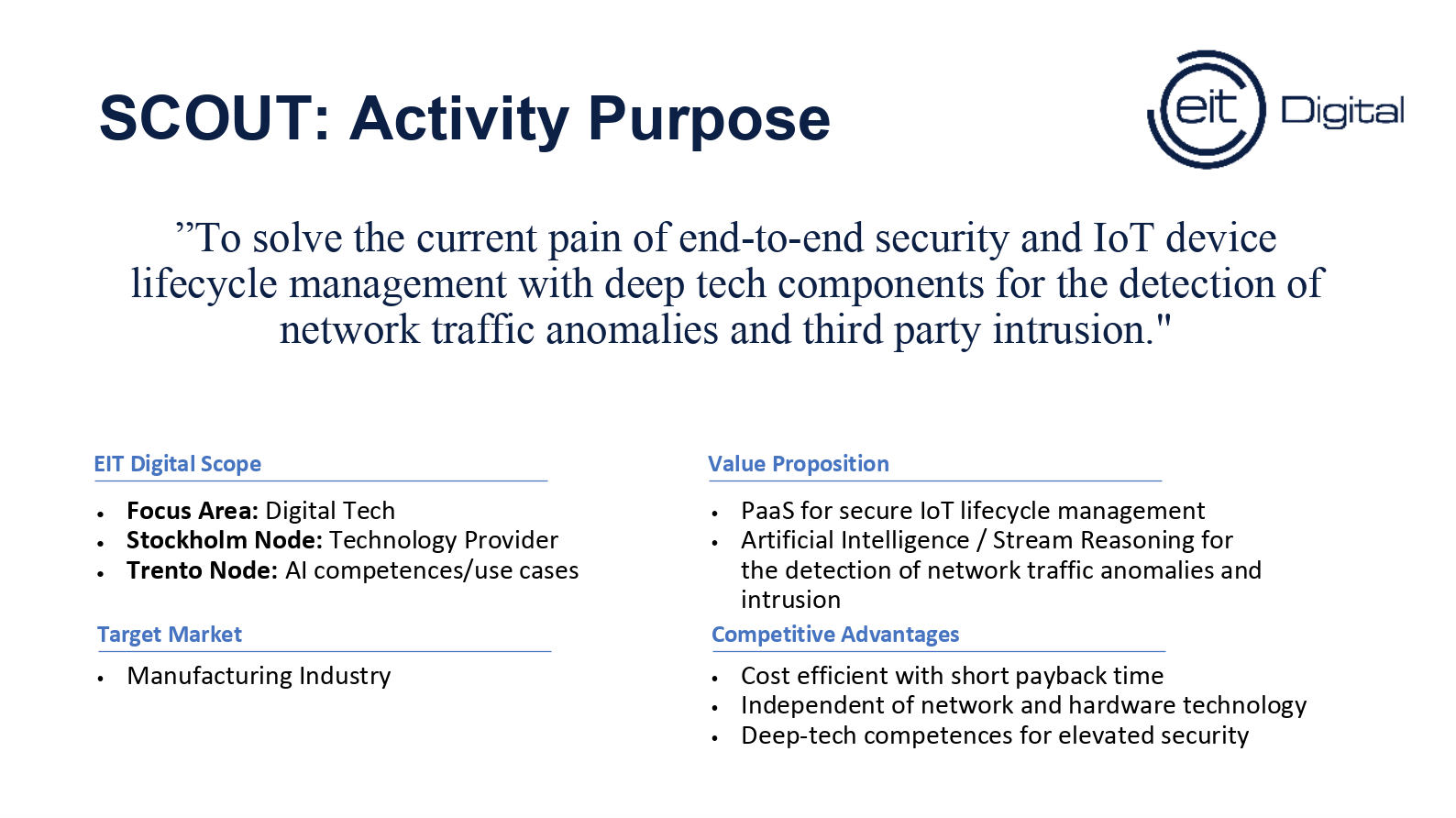
Activity purpose
SCOUT’s original scope combined secure end-to-end communication and IoT device lifecycle management with work on network anomaly and intrusion detection. The activity brought together technology provision and industrial use-case expertise.
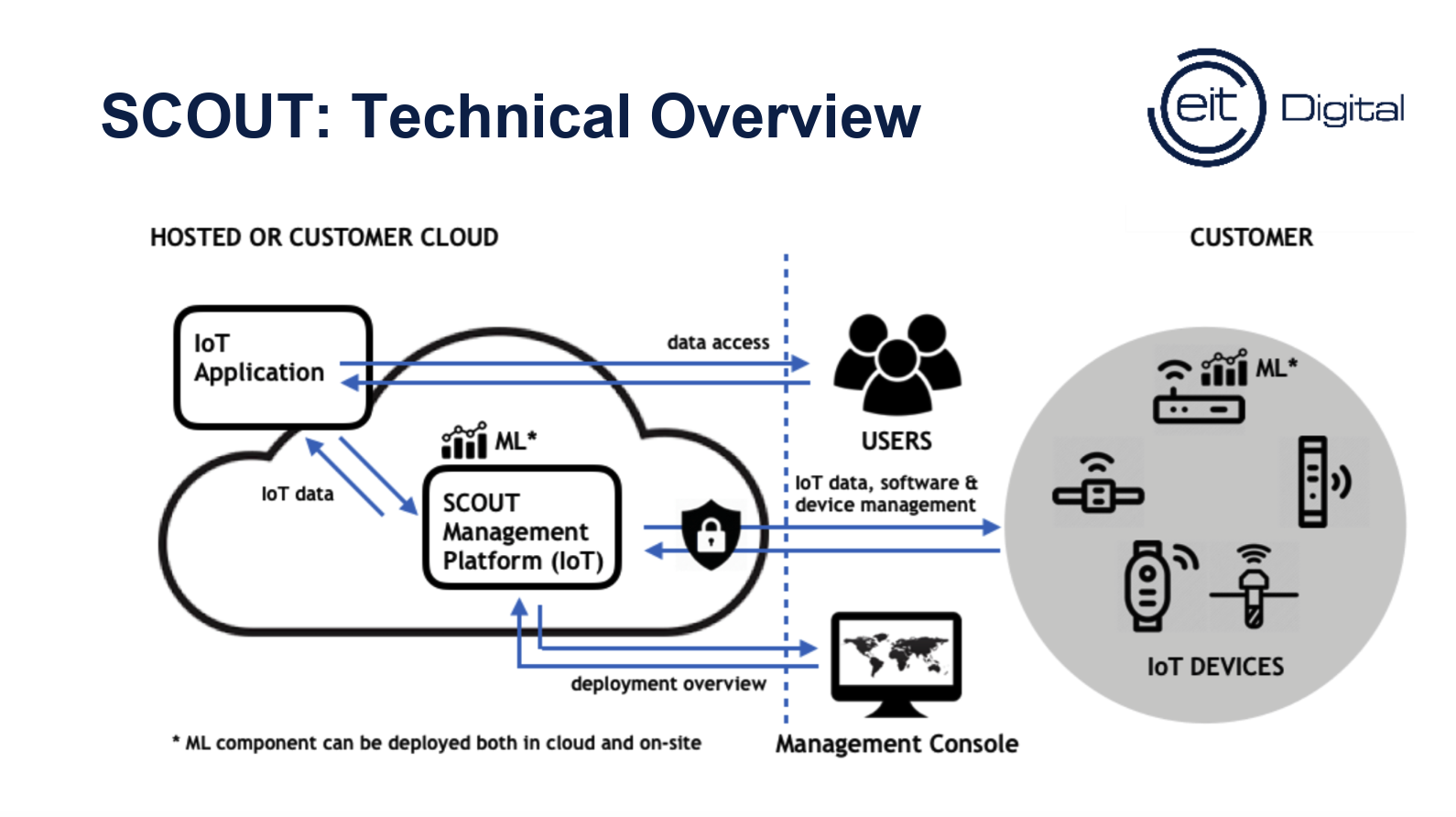
Technical overview
The original SCOUT architecture connected devices to a secure communication and lifecycle layer, routing application data to the customer’s IoT system. A cloud service API supported device management and over-the-air updates for communication modules and attached application microcontrollers.
Commercial value proposition
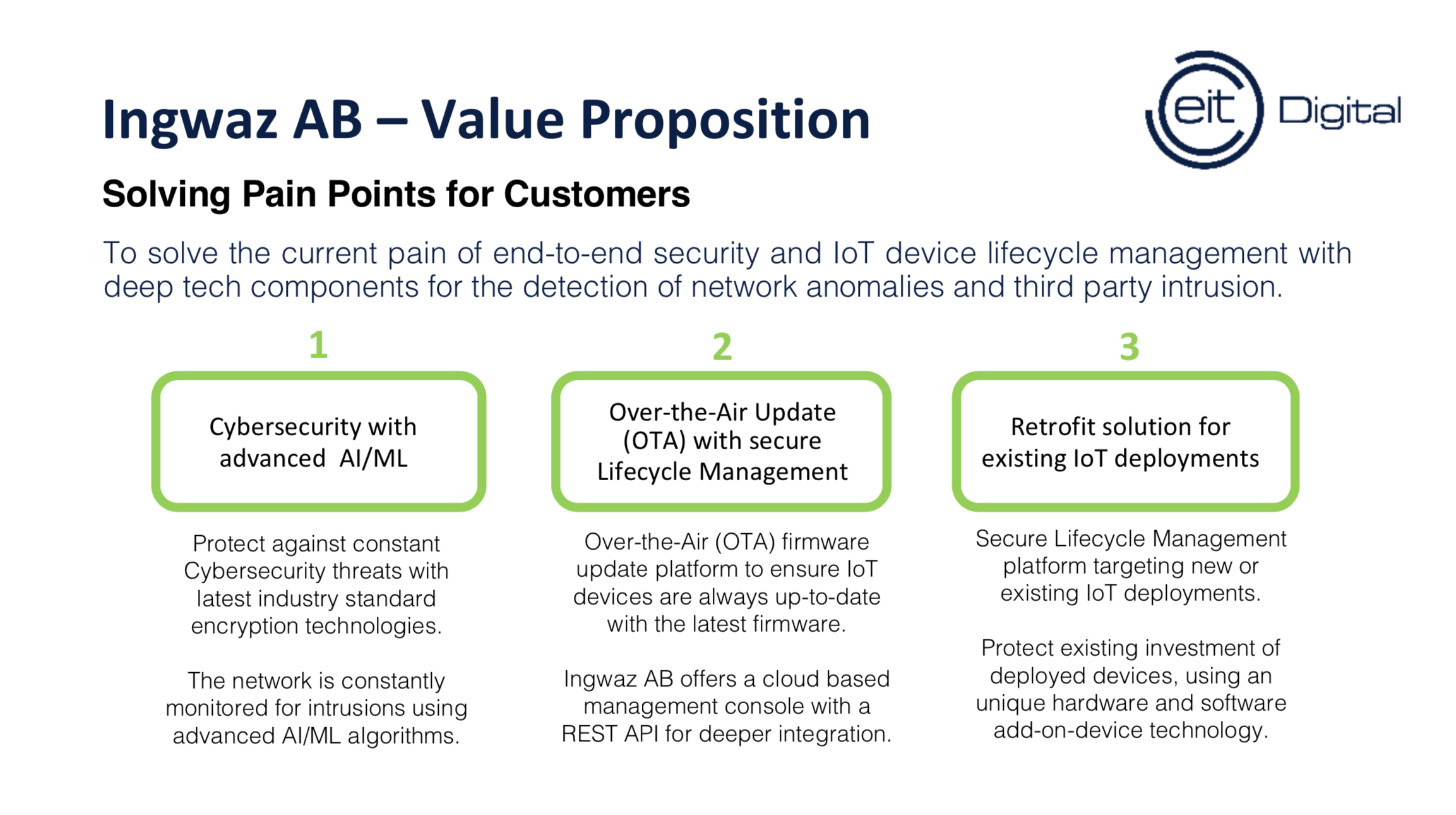
The original Ingwaz proposition brought together cybersecurity, over-the-air firmware updates, lifecycle management and support for retrofitting existing IoT deployments. It set out how the technology could address customer needs as a commercial service.
Project support & acknowledgement
Supported by EIT Digital.
SCOUT was supported by EIT Digital as an innovation activity.
This activity has received funding from the European Institute of Innovation and Technology (EIT). This body of the European Union receives support from the European Union’s Horizon 2020 research and innovation programme.


Build on practical experience
Bring a pilot into operation.
Turning an IoT concept into a deployable system? Talk with us about secure communication, application integration and the lifecycle infrastructure needed to support your devices.